


Suppose you are riding up and down an even dirt road, the cold mountain air in your face and the gigantic mountains of the Andes come soaring up around you like ancient protectors. Far below, you can see unfolding a colorful valley with a field of corn and quinoa. It is not any bike ride, but a tour of the very core of the former Inca Empire. Combination of adventure and history like no other.
When touring ancient ruins, being on a bus and pass by the ruins is one thing, but with a Sacred Valley bike tour you are right in the scenery. You are able to touch the ground through your wheels. Pull over whenever you are stunned by a sight. Have a personal relationship with history in a much closer way. This proactive style has transformed sightseeing into an actual adventure and hence it is one of the most fulfilling Peru bike tours.
It includes the highlights of the visits, including the enigmatic circular terraces of Moray and the physical exercise needed to see the place. Why this is the best place to go both to have a workout and to immerse oneself in the culture.
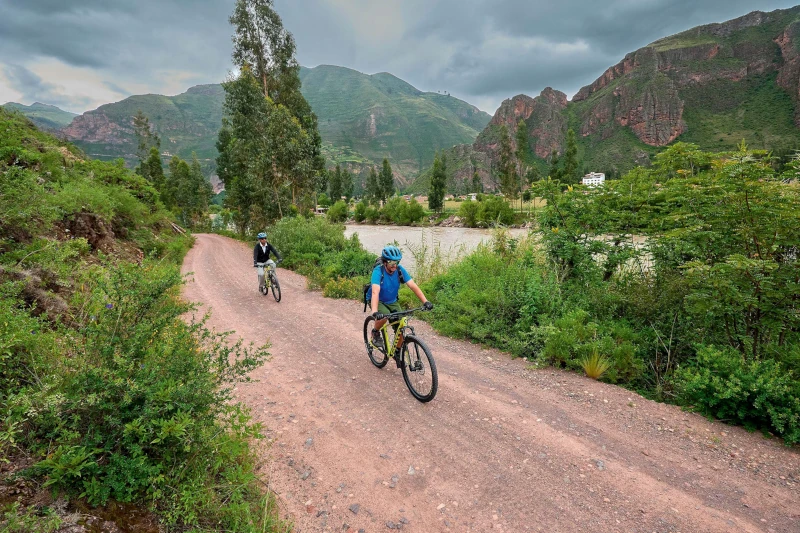
The Sacred Valley is a beautiful, green pathway between the ancient city of Cusco and the gates of Machu Picchu: think of it. This fertile land was the nerve center of the agricultural empire of the Inca Empire. That was carved by the sacred Urubamba River and with a stunning view of tall Andean mountains. The lifeblood of the empire was the fertile soil and the milder climate. It gave birth to a civilization and these landscapes were the sources of the food they ate. When riding here, you are riding history and not just on a trail.
The reason why the valley is particularly an excellent touring locale on a bike is a fact that not many tourists acknowledge: the altitude. Although Cusco is dizzyingly high at 3,399 meters, the Sacred Valley is in fact thousands of feet lower. This huge descent in altitude had made the air abundant in oxygen and so far the best location. In which to be acclimatized and spend some time on an active adventure.
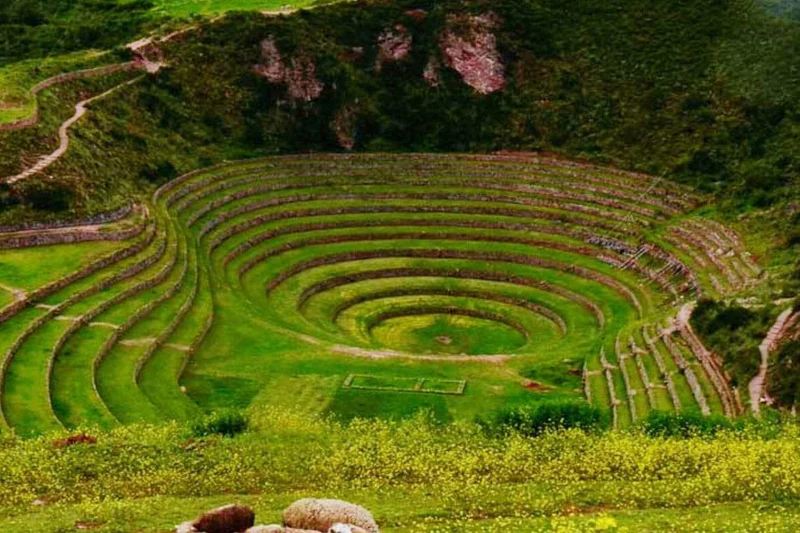
Your expedition is frequently initiated on a plateau where you see into the valley. The riding is exciting and not overwhelming as the broad dirt tracks cut across patchy fields and the snow-white Andes in the background. Every second you are in a rhythm, and the earth appears to sink beneath your feet. You see before you something which almost looks like an alien object: the ideal, concentric circles of the Moray village. It is this breathtaking introduction that makes an adventure tour on a bike around the region so memorable.
These are sunken bowl after bowl, great giants. Rather, scholars reckon that Moray was a brilliant agricultural laboratory of Incas. Imagine it was a giant, open-air greenhouse that was excavated out of the earth. The richness and the inclination of the terraces form a most exquisite effect of temperature. they may be much hotter in one spot than in another. This minimalism yet ingenious construction was what enabled the Incas to recreate various growing environments.
By sowing crops at different Cusco’s altitude. The Incas were able to experiment with the type of crops that would grow well in the different altitudes. It was a state-of-the-art agriculture decades in advance. This knowledge of microclimates, small, specific weather areas was instrumental in the feeding of millions of people. You pass out of this masterpiece of ancient science, and you must think about this genius.
Leaving the mysteries of Moray, a ride that will make your hair stand on end, you embark on a long picturesque coast as you head down. The trail becomes narrower and it cuts across the mountainside and the breathtaking scenery of the Sacred Valley opens up. Around a turn, then, and there lies it. A blaze of patchwork of thousands of tiny terraced pools tumbling down the canyon. There is the Maras Salt Mines.
It is not a natural phenomenon, but a wonder of human creativity. It is a magnificent landscape. The salt pans are fed by a very thick. These pools are passed down through generations to the local families. Which use the water in their shallow ponds. The heavy lifting is then done by the sun who evaporates the water and leaves. The only amazing thing about this is that this collaborative. Environmentally-friendly approach has been used continuously throughout the last 500 years.
On your way up and down the little walks between the pools you will come upon families busy. Their work, scraping and packing the valuable mineral. And that is what makes the cultural significance bike tours of the Cusco region so special. Not only are you gazing a relic, you are gazing a tradition. Most families sell their harvest in small stands around the area. Where they sell everything, pink finishing salt to some special mix with local herbs.
The experience of that dramatic ride down to the salt pans may have you questioning: exactly how much experience in biking does it take to have a trip like this? The best thing is, you do not have to be an experienced biker. The large percentage of these tours are a Sacred Valley tour that is for beginners and geared towards sightseeing and fun as opposed to a physical ordeal. The roads are taken with a particular route due to the beauty of the scenery and easy terrain.
The support vehicle is what makes these adventures quite accessible to nearly anyone. Imagine that it is your own safety net on wheels. This is a van or bus that accompanies the group all day, with water and snacks and first-aid and your extra clothes. Should you need to take any rest and you get bored with one part or it is too hard, or you just feel like having a ride you can just get into the vehicle and take a ride of course enjoying the scenery. It means that the tour is never on terms of your own.
The other one that you may be asking yourself is the downhill mountain biking in Cusco. This does not imply extreme and cliff-hugging routes. Rather, the routes have been intelligently planned by the tour operators as mainly downhill or along gradual running routes. The idea is to leave the work of most to be done by gravity, the answer to the question of, is biking in the Sacred Valley a hard work.
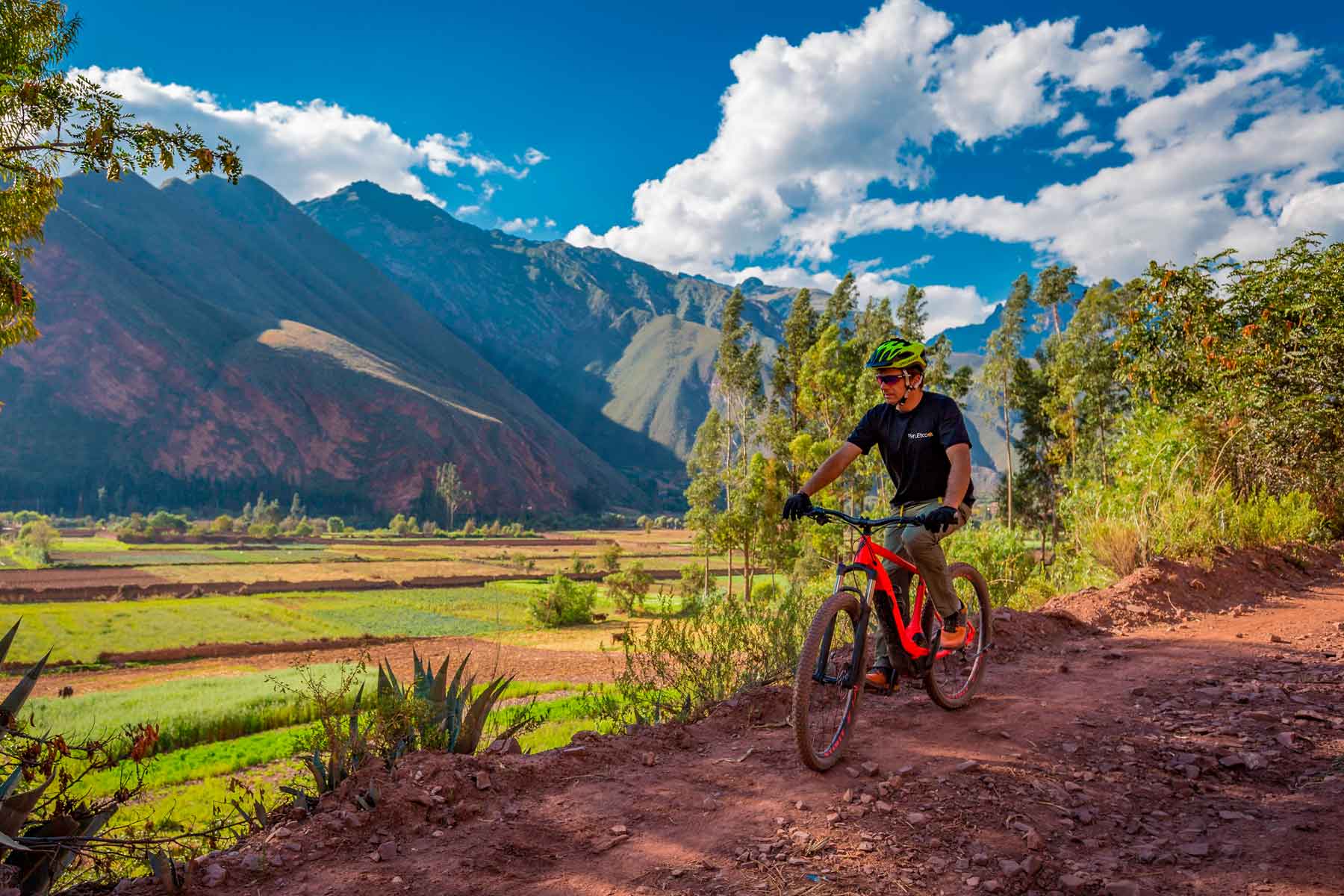
And then there is the pressure of the Andes, above physical exertion of riding a bicycle, another element. As much as you may find yourself out of breath after walking a few flights of steps on the stairs, you body needs time to adapt to the thin air. It is referred to as acclimatization and it is the key to enjoying your high up adventure. This is the best piece of advice regarding controlling altitude: the only thing you should do is get to Cusco at least one or two days before you start your tour.
You will find quite soon as you stroll through Cusco that the area has its own cure to the altitude; coca tea or coca plants “mate”. Andean people have been using this herbal infusion over the ages to alleviate the impact of elevation. It is mild with earthy flavor like green tea and a common cultural dish that you will be served of everywhere. You need not be worried, your guide will know how to handle altitude. A flask of coca tea will be waiting on them, and they will always carry oxygen as an additional precaution, but scarcely ever have to use it.
Lastly, keep in mind that the bike tour is even planned to consider the altitude. Tour operators are also smart enough to make you work as little as possible by taking the more downhill routes. You are able to just enjoy the excitement of the ride and the beautiful scenery, without straining your body. This intelligent design of the place is that the high elevation is now only another element of the special Andean ambiance, which does not hinder your adventure.
Knowing your operator is prepared for the altitude is one thing. How do you choose a Sacred Valley bike like Luan Travel. Who delivers an amazing experience from start to finish? Not all tours are created equal, and asking a few smart questions can help you find the best Sacred Valley mountain biking adventure. It’s about ensuring your safety and comfort so you can focus on the fun.
Before you book any Cusco adventure bike tour, get clear answers to these three questions:
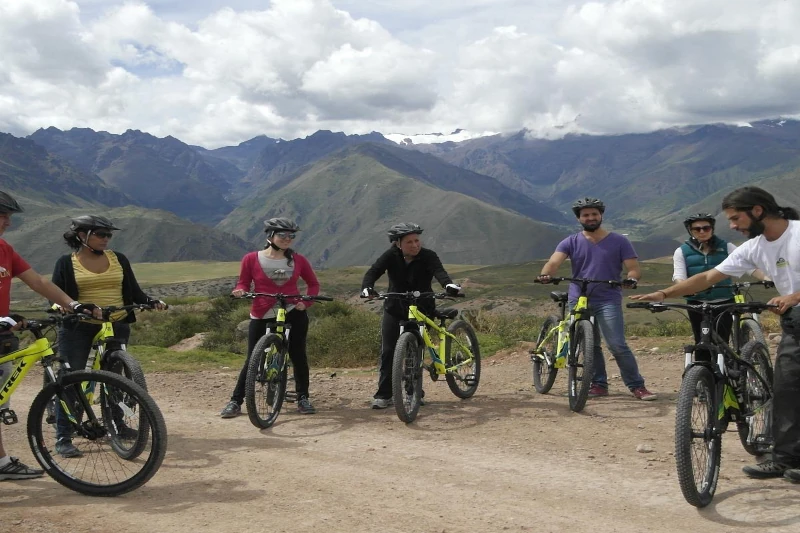
In the Andes, the weather is a main character, the sun can feel intense one moment, only to be replaced by a cool mountain breeze the next. The trick to staying comfortable is not one perfect jacket, but layering. This simple strategy allows you to peel off a fleece as you warm up from pedaling and add a windbreaker when you stop to admire the view. Knowing what to pack for a Peru bike tour is easy. A small day-pack with a few essentials is all you’ll need for your day.
Pack light with just these key items:
That last item cash is our pro-tip. While your tour covers the big things. Having some Peruvian Soles on hand lets you buy beautiful, hand-harvested pink salt directly from the families at the Maras Salt Pans or leave a well-deserved tip for your guide. It’s often these small, personal interactions that make for the best memories.
Exploring the Sacred Valley, Chinchero, Maras and Moray by bike transforms it from a point on a map into a living landscape you can actively explore. Where others view ruins from a bus window, you can envision yourself pedaling the Urubamba valley bike trails, connecting directly with history. This experience stands in a class of its own an immersive, single-day discovery that moves beyond a simple choice between the Inca Trail and a standard valley tour.
This is the very heart of the Sacred Valley Bike Tour: Culture and Adventure. You’ll finish the day dusty and exhilarated, with a genuine connection to the land and its enduring stories. It’s an experience that becomes part of your own journey.

 Tripadvisor