


You’ve heard of Machu Picchu. You’ve probably even got the famous Sacred Valley on your itinerary. But what if the most fascinating journey through Peruvian history is the one most tourists miss completely?
Welcome to Cusco’s South Valley, a tour that acts like a time machine. In just one morning, you can journey through three completely different historical chapters of Peru. You’ll start with the genius of Inca water engineering, then step even further back in time to a huge. A planned city built by a culture that predates them, and finally end in the Spanish colonial era.
So, with limited time in Cusco, is the South Valley worth visiting? For travelers looking to escape the biggest crowds and see a different side of the Andes, the answer is often a resounding yes.
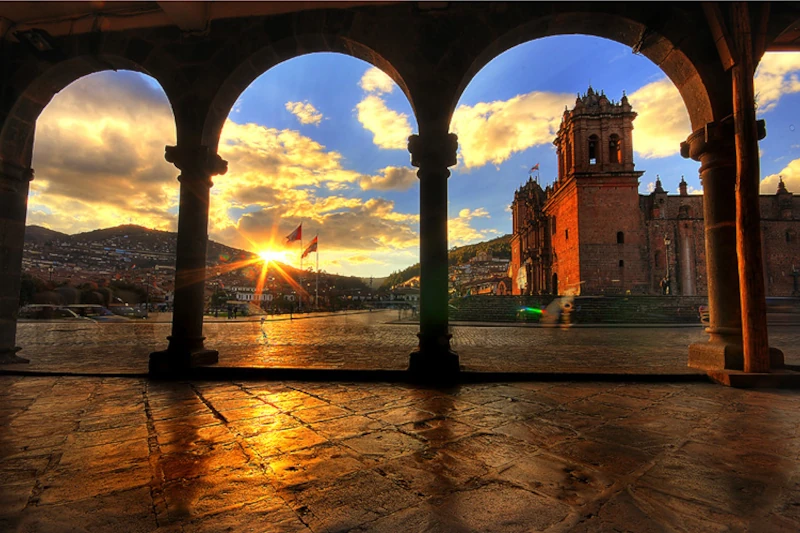
Making the choice on how to spend your valuable time in and around Cusco can be difficult. You have been to the typical Sacred Valley tour most likely, but the little known South Valley is a totally different story. There is no need to decide which one is superior to the other, but which one fits your schedule and interests better.
The greatest variance is in terms of time and theme. The Sacred Valley is a day-long expedition with nearly no more than the awe-inspiring expanse of the Inca Empire. Colossal terraces and well-known citadels, such as Ollantaytambo and Pisac. The South Valley, in contrast, is a small half-day trip through the various historical periods of Peru. During a day trip itinerary of South Valley Cusco. You will not only get in view of the genius of the Inca. A gigantic pre-Inca city of the Wari culture and a beautiful Spanish colonial church.

However, in the end it all depends on your style of travel. The Sacred Valley is a place to visit in case you have a full day and you would like to see. In fact the most popular heartland of the Inca empire. However, in cases of time constraints. Where you are fascinated at seeing several historical periods in a row or just avoiding the largest mass of people. The South Valley provides its own adventure of remarkable satisfaction.
After having made a decision to visit, the issue that arises is how you are going to do that. There are two major ways to explore the South Valley: by joining a guided tour or creating your adventure with the help of local transport. The best decision makes depends on your budget, and the level of comfort and the level of flexibility required.
To have the ultimate convenience, guided tour is the best way to go. These half-day tours are available in dozens of agencies in Cusco and usually come in a comfortable van. Where the guide explains the history of every location. A standard South Valley sightseeing trip out of Cusco will cost between 10 and 15 USD. It is an excellent and tension-free alternative when you will feel like taking it easy.
In case you are bolder, you can visit the Cusco South Valley without a guided tour, which is also interesting and fulfilling. The local approach is by using colectivo shared vans or taxis that operate along the main highway between the places. Although you have the benefit of spending as much time as you want at each destination and it is a little cheaper than taking a taxi. It is more costly in terms of planning and it takes some basic Spanish and some patience to call a ride between destinations.
Anyhow, however you decide to travel, it is something that cannot be compromised i.e. the entrance fee. The Boleto Turistico del Cusco (BTC), or the Cusco Tourist Ticket covers all the three major sites. Imagine it is a one-ticket pass which admits you to various attractions. This ticket should be bought separately of your tour or transport. You should not forget about it in your budget. You have your ticket and transport sorted, you now are in your first stop.

When you first approach Tipón you will not hear only the terraces of stone which are so high, but the running water. It is an impressive acreage exhibit of Tipon Inca water management, a web of accurately cut channels, aqueduct, and fountains which continue to flow flawlessly after half a millennium. The other Inca ruins have glorified monumental walls whereas, Tipón has glorified the flow of water.
But was this all in order to farm? Although undoubtedly the terraces were also conducive to cultivation, a great number of specialists consider Tipón to be much more a ceremonial center devoted to the cult of water.
To take the most picturesque shots, go to the principal series of terraces, at which you can get the complete dimensions of the channels dropping down the stone steps. This is a pleasant place that frequently features in the Tipon Pikillacta Andahuaylillas tour. One local piece of advice: the local town is known throughout Peru as a place that sells cuy (oven-roasted guinea pig) which is a classic of traditional food in Tipon Cusco. Having been impressed by the accuracy of the Incas, your trip proceeds taking you centuries earlier to a city of the other nation altogether.
The next place to visit after the beautiful stonework at Tipón is like entering a new world altogether. Pikillacta was constructed around the year 600-1000 AD. It is a monument of the Wari people, a mighty civilization, which conquered the Andes way before the Incas. Where the Incas were sculptors in stone that could serve to fit forms, the Wari were building planners. It was not a spiritual retreat; it was a city, a huge and a meticulously designed one, an administrative hub of a long-lost empire and one of the most striking little-known ruins around Cusco.
The change of architecture is dramatic. In lieu of the elegant, rounded terraces as at Tipón, there will be a sprawling maze of straight walls that seem to tower high. Most of these buildings, some of which were two or even three stories high, were constructed with rough fieldstones and adobe, or sun-dried mud and straw bricks.

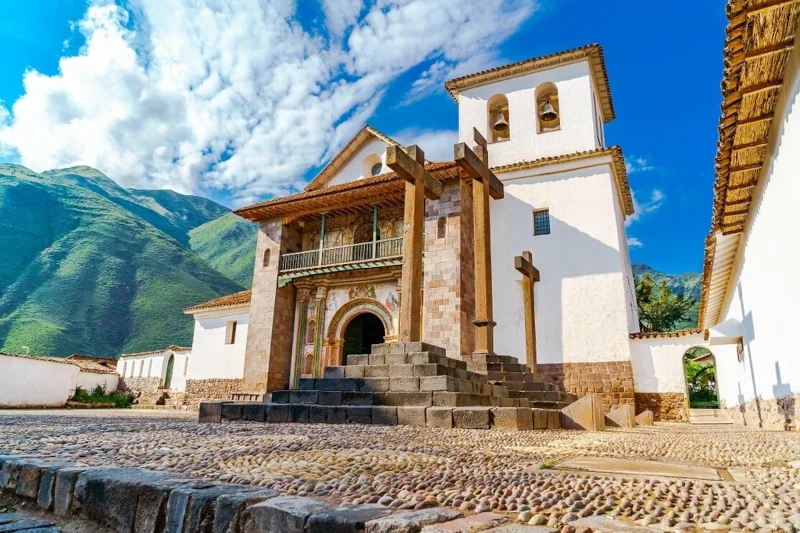
Our time traveling draws its last bounding leap forward as we get to the silent square of Andahuaylillas. The San Pedro Apostol church appears modest on the outside: a bare colonial structure, whitewashed. However, when you enter its doors, you will know why it has become flagshipped with the astonishing tag line of the Andahuaylillas Sistine Chapel of America. The interior is a riot of art: the walls and ceiling of every square inch are loaded with riotous frescoes, elaborate carvings in wood, and gold leaf that is glowing in the dim light. It is a breath taking end to the historical tour of the valley.
There was a purpose in this awe-inspiring interior. This masterpiece was commissioned by Spanish priests in the 17 th century to educate the locals on Catholicism, the Quechua. The artists also intelligently mixed the Catholic imagery with the ancient Andean symbols to make the new religion familiar. When you are exploring, pay attention to the murals. You could find the dress of the Virgin Mary is in the form of a mountain, a homage to the earth deity of the Andes.
One of the few details that should be mentioned: the access to this church is not part of the general tourist ticket (Boleto Turistico) and must be purchased separately with a minor fee. It’s absolutely worth it. And this is the end of the amazing story of the Tipon Pikillacta Andahuaylillas tour where you are offered masterpiece of the Inca and the pre-Inca metropolis and ultimately this sparkling splendor of colonial religion. After observing the three pillars of the history of the region, the details that follow will be useful in planning your trip.
Ready to explore? This is due to the fact that being prepared is the difference between a good and enjoyable half-day trip. You will be away a few hours, so a little planning is well worth it. The following is a short list of some items to have:
Concerning when to visit the South Valley of Cusco, the dry season (April to October) will be the time when you would want to have the good weather, and the day will be clear. The majority of tours are done in the morning at which time it is best since your afternoon is not occupied. The stonework of Tipont also turns out really bright by the morning light, as well as the gold leaf of the church at Andahuaylillas.
Lastly, one cannot make a visit to this region without talking about the food. One particular dish that is known throughout Peru is cuy, which is roasted guinea pig; made in the town of Tipons. Although this might be an adventure, having this delicacy at Tipon Cusco is a genuine culture. There are dozens of restaurants devoted to it, which proves that it is a local delicacy. It is an incredible experience to conclude your tour and go back to the city.
Since the flowing water of Tipón to the primeval grid of Pikillacta and the golden chapel of Andahuaylillas. The South Valley seems to clearly possess a time journey beyond the major inflows. So, is it worth visiting? It is a resounding yes, should you be interested in other historical sites other than Incas. Enjoy finding a hidden gem or simply need to take a shorter day trip as part of a full schedule.
After all, the decision of whether to go or not to go on such a historical trip. The depths in favor of the more renowned paths of the Sacred Valley remains in your own hands. Here is the less-travelled road, which offers another, more silent, though no less sublime revelation into the soul of the Andes.

 Tripadvisor